

The Missing Middle
Why regenerative agriculture isn't struggling because of farmers—it's struggling because of the system around them.


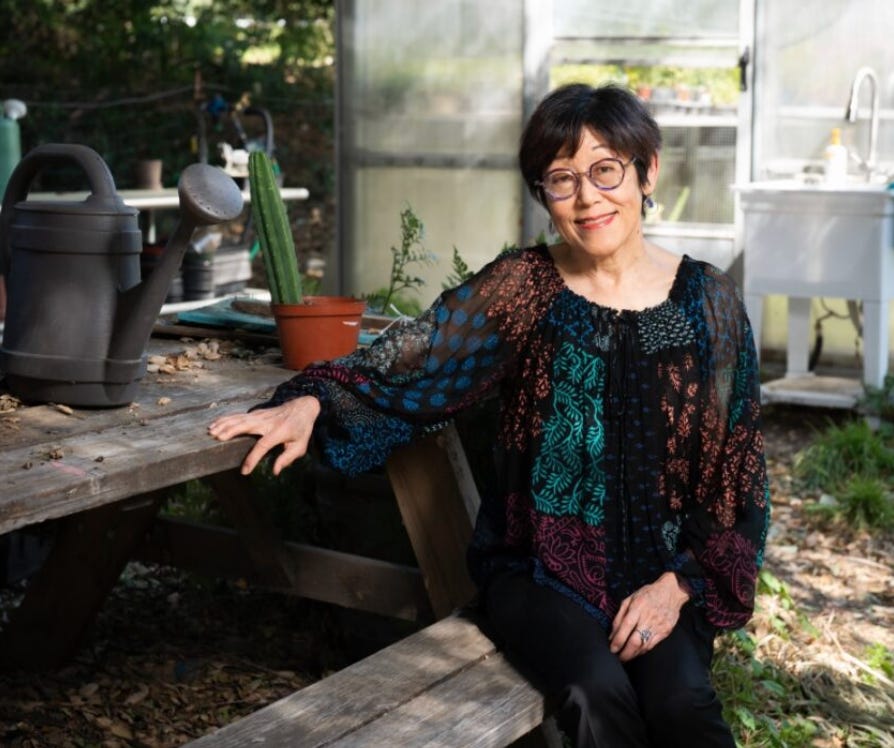
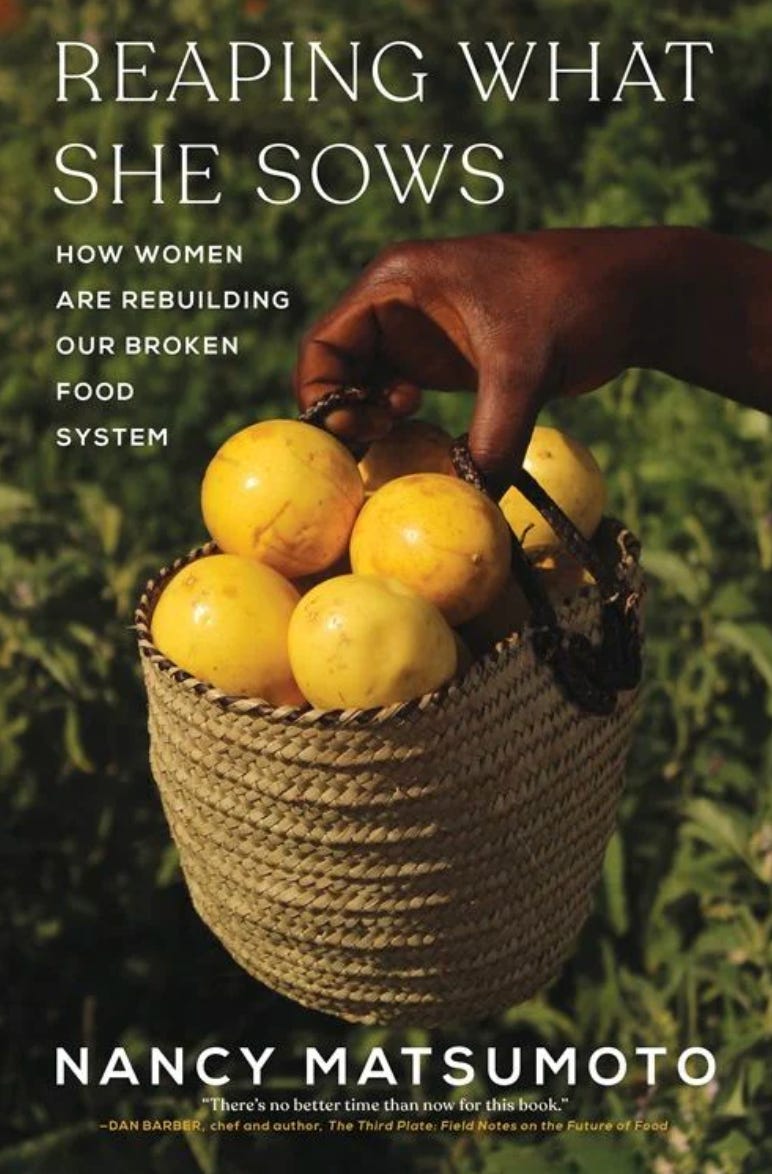
Back in March, I got the opportunity to interview food writer and editor Nancy Matsumoto for Pomona College’s Magazine. We’re both alums. Nancy’s written a book called Reaping What She Sows, looking at how women are rebuilding our food system one regenerative ag concept at a time. I thoroughly enjoyed it and the Substack she writes Reaping, by Nancy Matsumoto.
Our conversation about the book was so good, in fact that I plan to offer the recording in its entirety as an episode of the upcoming Season 3 of the Enlightened Omnivore Podcast, (if Nancy will let me). The season will start up again in September with weekly episodes. While re-listening to our conversation, it got me thinking, and I thought I’d share a little more on what Nancy has to say about regenerative agriculture.
Most people think regenerative agriculture has one big problem: scale. How do we take what all of these amazing farmers are doing to raise delicious and nutritious food and rebuild soil, and grow them to a size that could compete with factory farming?
In her new book, Nancy Matsumoto, award-winning food journalist and author of Reaping What She Sows, argues that regenerative agriculture has another problem entirely: infrastructure. Too many really exceptional regenerative farmers simply can’t get their product to market because the system is designed for a totally different marketplace. The risks and costs of swimming upstream to implement regenerative methods, leave farmers in an unprofitable transition period that Nancy refers to as the Valley of Death.
When I had my butcher shop, we worked directly with small, family-owned regenerative ranches in California. Every rancher was struggling. Not because they couldn’t raise great beef or pork. In fact, many of them had awards for their meats. They struggled because they couldn’t find slaughterhouses, refrigerated shipping, or distributors to help them get their products to market.
If we want regenerative agriculture to thrive, we need to take a hard look at the systems in place, and make sure we level the playing field for all producers, especially those who are trying to build healthier soils, healthier ecosystems, and healthier communities—not just the ones maximizing yield.
We Already Know How to Farm Better
Nancy Matsumoto knows her stuff. She’s an award-winning food and agriculture journalist based in Toronto and a longtime contributor to one of my favorite publications, Civil Eats. She’s also a James Beard-honored sake expert. Her work examines the intersection of food, farming, culture, and sustainability, with a particular focus on the people and communities building more resilient and equitable food systems. And she’s traveled the country documenting the people quietly proving that another way of farming is possible.
When I asked her why regenerative agriculture has struggled to gain traction, she didn’t hesitate.
“There are examples of it all over, and I write about them in my book. I think what’s underappreciated is just how hard it is to build something like this. The way our federal government is structured is really to support... agriculture that is very destructive and extractive.”
Regenerative agriculture isn’t an experiment anymore. There are countless examples of farmers succeeding with healthier soils, more diverse ecosystems, and better food. The six women Nancy profiles, including a vegetable farmer, a miller, a baker, a vintners, an indigenous seed keeper, and a rancher, aren’t trying to prove regenerative agriculture can work. They’ve already done that.
The question isn’t whether we know how to farm better. The question is do we have a food system in place capable of supporting the people who are making the food the way we want it?
The Valley of Death
For many farmers, the biggest barrier to regenerative agriculture isn’t learning new farming practices, it’s surviving the years before those practices become profitable. In her book, Nancy describes this transition period as the “Valley of Death,” a stretch that can last as long as seven years!
The risks are enormous. Farmers often invest in new fencing, expensive equipment, cover crop seed, livestock management, and soil improvements long before they see a financial return. I’m continually amazed by how much debt, sweat, and perseverance farming requires, and how little money is left at the end of the season. It’s not uncommon for a spouse to work an off-farm job simply to keep the lights on in the barn.
“You need to lay the groundwork because in the conventional system, you have a lot of subsidy and support.”
“You don’t have this in the alternative food system. So there are many creative people who are figuring out low-cost loans, philanthropic backing.”
Nancy describes one farm that relied on nine different organizations to fill the financial and logistical gaps that conventional agriculture takes for granted. That’s an extraordinary amount of coordination just to help one farm succeed.
I’ve seen the same dynamic firsthand. Years ago, I met several grass-finished cattle ranchers in Northern California, where abundant rainfall and lush pasture produce exceptional beef. Raising the animals wasn’t the problem. Harvesting them was.
The nearest processor was 400 miles away. Then that processor came under pressure from a much larger commodity beef producer to stop accepting small batches of cattle, say 10 or 12 head at a time, because they claimed it slowed down the slaughter line. The local slaughterhouse initially resisted. They wanted to support small, independent ranchers like my suppliers. But when the larger producer began withholding cattle, they had no choice.
Today, my rancher friends now have to pool resources with their neighbors and ship cows less frequently to secure a place in line.
That’s the Valley of Death. Not poor farming. Not poor demand. A system built for high volume players asking regenerative farmers to play by rules they never wrote.
The Forgotten People Who Feed Us
When we celebrate local food, we usually celebrate the visible parts of the system—the farmer shaking your hand at the farmers market, the restaurant menu listing growers by name, or a YouTube video of the rancher standing in a green pasture beside a herd of cattle.
But nobody gets excited about refrigerated trucking. Nobody posts selfies from a grain elevator. Nobody writes romantic essays about USDA inspectors or meat processors. And yet those invisible pieces determine whether regenerative agriculture survives.
“They’re these sort of very unsung and unglamorous parts of the local and regional supply chain that are so key and are not being addressed [in the regenerative movement],” Nancy tells me.
I learned that lesson myself from behind the butcher counter. Our biggest headaches were rarely finding the ranchers producing exceptional meat. The challenge was getting that meat to our shop efficiently and affordably. A boneless, skinless chicken breast may pass through eight or ten different pairs of hands before it reaches your plate. And every step along the way adds cost, complexity, and risk.
We tend to imagine food systems beginning on the farm and ending on our dinner plates. In reality, most of the important work happens in the middle.
Proof That It Can Scale
Fortunately, Nancy’s book isn’t simply a diagnosis of what’s broken. It’s also full of examples of what’s working.
One of my favorites is Lotus Foods, a company built around organic rice and regenerative growing practices that partners with smallholder farmers around the world. Rather than choosing between mission and growth, Lotus has managed to do both, placing products in Costco while continuing to invest in better farming methods, seed sovereignty, and farmer education.
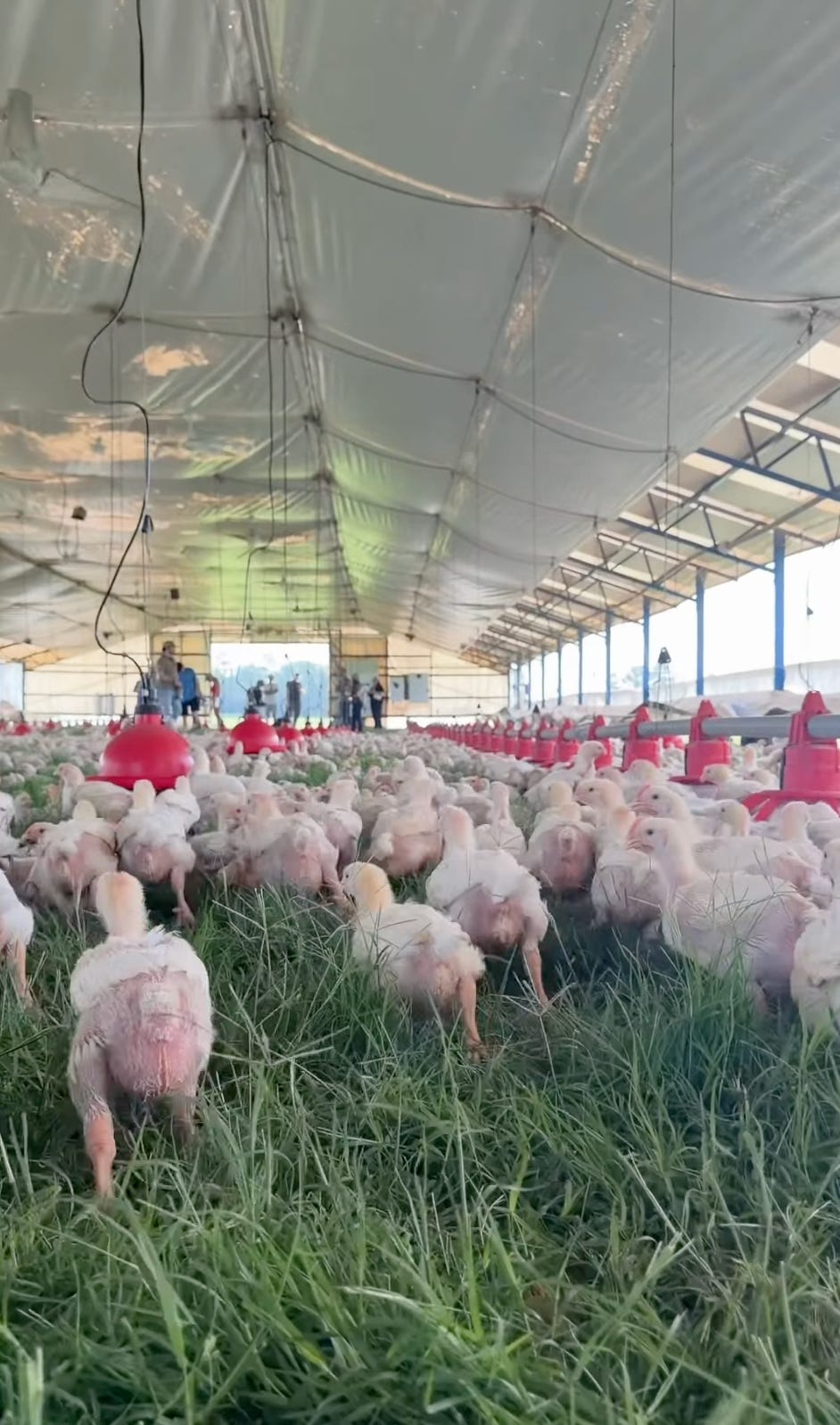
Pasturebird, a regenerative chicken producer that my butcher shop was among the first to carry, is another good example. They were recently acquired by Perdue, and I’ll admit, my first reaction was that it was the ultimate sellout. Talk about joining the Evil Empire. But I also wanted to see what would happen before passing judgment.
Today, Pasturebird’s chicken tractors are regenerating thousands of acres of former GMO corn fields in central Georgia. Their birds are reaching more consumers than ever before, and recently I found their chicken at my local Sprouts for less than we charged at the butcher shop. It still tastes better than anything else at the grocery store too.
Progress indeed.
Both examples challenge one of the most common criticisms of regenerative agriculture—that it’s simply too small to matter. Ironically, I think some of its biggest supporters contribute to this perception. We often use “small” as an inherently positive adjective. Consumers hear “small” and they think trustworthy, wholesome, and responsible.
But small isn’t the goal. Impact is.
If regenerative agriculture is going to reshape our food system, it has to move beyond niche markets. That doesn’t mean abandoning its values. It means finding ways to scale them.
Sometimes, bigger really is better.
We Need Better Bridges
One of the recurring themes in Reaping What She Sows is that healthy food systems behave like healthy ecosystems. They are diverse, interconnected, and built on relationships rather than extraction.
The irony is that we often ask individual farmers to fix problems created by the larger system surrounding them.
We tell them to improve their soil, to reduce chemical inputs, and rely more on organic amendments. That they raise animals more humanely, increase biodiversity, and store more carbon.
Then we send them back into supply chains designed almost entirely for commodity agriculture, where their competitors aren’t expected to do any of those things.
No wonder so many struggle.
As consumers, we’re often told to “vote with our dollar.” That’s good advice. But dollars alone won’t build regional slaughterhouses, grain mills, food hubs or distribution networks. Those require communities, institutions, entrepreneurs and public policy all pulling in the same direction. Just look at how much support non-regenerative agriculture gets, to the tune of more than $40 billion in subsidies and support every year.
Healthy systems rarely emerge because one piece becomes perfect. They emerge because the relationships between the pieces become stronger.
That’s true in forests. It’s true in families. It’s true in communities. And it’s true in agriculture.
Nancy’s book celebrates remarkable women who are rebuilding our food system from the ground up. But perhaps its most important lesson is that they shouldn’t have to do it alone.
If regenerative agriculture is going to become more than a niche movement, it won’t be because we found a better tomato or a more flavorful loaf of bread.
It will happen when we finally build the missing middle—the invisible infrastructure that allows good farming to become the norm instead of the exception. Healthy food systems don’t emerge when we optimize just one part of the system. They emerge because every part of the system learns to work together.
!!!FIRST CookStack Collective: Rebecca Blackwell!!!
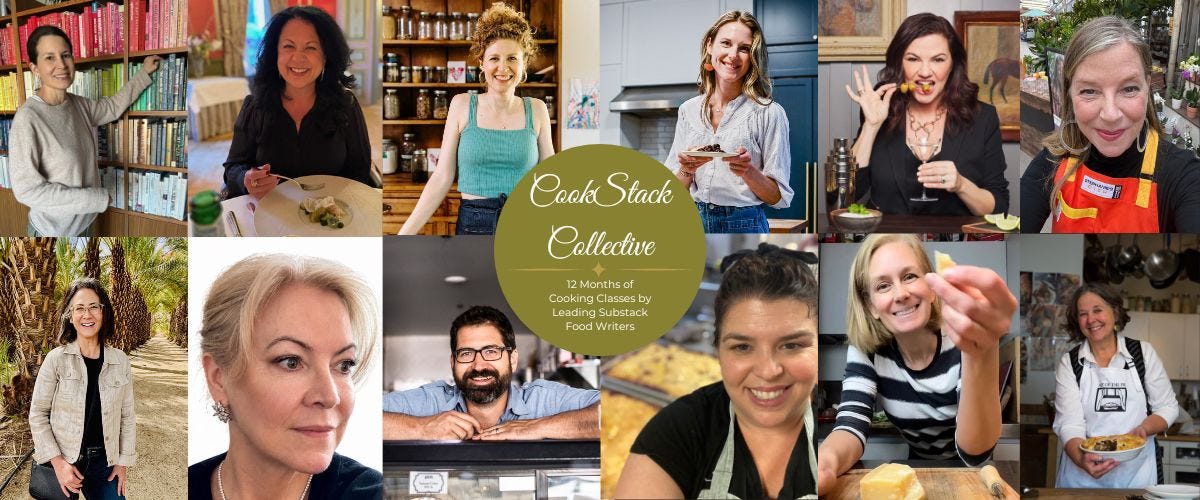
Paid subscribers can join us on Friday, July 17 at 4pm PT / 7pm ET, for the inaugural CookStack Collective class. Rebecca will be teaching live from the galley of her sailboat, preparing a colorful hummus platter, sesame chicken salad, and…a watermelon salad—proof that summer may have many flavors, but watermelon is almost always one of them. I’ll be there too with some watermelon trivia!
Stay Connected
Follow along on YouTube, Instagram and TikTok for video content, reels, and behind-the-scenes thoughts. I’m also on Facebook and LinkedIn.
Say hi on Substack Notes—I’m posting almost every day about my random reflections on life.
Join me in Chat. It’s a space just for subscribers, kind of like a group text but less embarrassing. Download the app, tap the Chat icon (it looks like two speech bubbles at the bottom), and find the latest “Enlightened Omnivore” thread.
 | A guest post by
|
Thanks for deeply understanding and articulating the message of my book, Steve. And for the good example of Pasturebird amplifying impact and I hope keeping their values intact. So much of the alternative food system is about connecting and supplying those missing links in the regenerative supply chain.
The farm bill would be the shortest path to building infrastructure if we could get even a small part of the budget going to GMO commodity crops that degrade our soil and waterways 😤😤😤