
Looking Up; Looking Down
Why the future I once imagined in the stars now feels much closer to home.

Before we begin: I'm excited to announce a new benefit for paid subscribers—the CookStack Collective, a year-long series of live cooking classes with twelve Substack food writers. I'm also hoping to welcome 20 new paid subscribers this summer (18 to go!) to help support the essays, podcasts, workshops, and conversations we're building together here.
News of SpaceX’s recent IPO got me thinking about the universe right here on Earth.
When I was in junior high, I wrote President George H.W. Bush an impassioned letter that we should rename Columbus Day to “Explorers’ Day.” Instead of celebrating a fifteenth-century navigator with a complicated legacy, I argued, we should honor America’s astronauts—the men and women who had pushed farther into the unknown than anyone had gone before. I never heard back from the White House. Maybe Bush was busy.
My love of space was shaped by growing up in the 1980s and ‘90s, with Star Wars and Robotech. But, I was also a NASA nerd. I watched The Right Stuff a hundred times. I had Goddard Space Flight Center stickers on my notebook, a telescope in my room, and stayed up late to watch CSPAN coverage of the Hubble Telescope. And when the Space Shuttle Endeavour took off on its maiden flight, it felt like redemption for the Challenger disaster that I’d witnessed on a classroom TV screen.
Space exploration was humanity at its best. Curiosity. Courage. Cooperation.
Which is probably why, years later, I became an early admirer of Elon Musk.
Long before his infatuation with Twitter, or his distraction with DOGE, Elon Musk had a boyish infatuation with space that reminded me of my own. He also had an unbridled drive to innovate, to solve big problems, and to give two shits about how others perceived his path to success.
Knowing next to nothing about him, I decided to read his biography written by a college classmate of mine. Musk’s enthusiasm, drive, and passion came through in every chapter. So did his single-minded rationality, systems thinking, and utilitarianism. The way he talked about enthusiastically deleting things that got in his way made me wonder if he was talking about more than just buggy code.
Musk was tackling impossibly large problems: the environment, space exploration, global Internet access for all. And while more and more people lauded (or feared) his simultaneously growing wealth, I admired him because he seemed to be the only person with shovel-ready solutions to solve the world’s biggest problems, and he was willing to risk everything to give them a try.
Then something shifted. Somewhere along the way, I noticed a change. Not just in Elon, but in myself.
I realized I wasn’t peering up into the sky nearly as often anymore. Instead, I found myself looking down. Not because I’d lost my sense of wonder or enthusiasm for the cosmos. But because I’d found it somewhere else.
In 2014, I left my corporate career and started working as a butcher. With my head down, focused on the block, I thought I was simply learning how to cut meat and provide greater food transparency to my family and community. Instead, I stumbled into an entirely new universe.
Rather than heavens filled with planets, stars, nebulae, and galaxies, I was learning about fields of fungi, nematodes, roots, and watersheds. I was learning from farmers who stewarded their own soil-based galaxies of billions and billions of microbes. The astonishing choreography of all the Earth’s systems was just as fascinating as any images beamed back from space aboard the Galileo probe.
I also realized that the more I learned about regenerative agriculture, the harder it became to think of nature as some primitive system waiting to be improved through techno-optimism alone. Increasingly, I grew frustrated with environmental conversations that focused on replacing natural systems rather than better understanding–and cooperating with–them.
Folks talked about cultured alt meat replacing flesh-and-blood livestock, or patented GMO seeds outpacing natural selection. Artificial intelligence would soon replace farmers. Why not rely on geo-engineering, or space mirrors, or giant vacuums to clean up all this heat and carbon that Mother Nature simply couldn’t fix?
I’m no luddite. I appreciate technology. But instead of asking, “How can technology replace Nature,” I think we need to ask, “How technology can cooperate with her.”
Because to me, Nature is the ultimate technology. Every pasture, prairie, or forest represents four billion years of iterative design that no amount of R&D or venture capital can out-engineer. That’s why photosynthesis still outperforms solar panels, soil microbes manage nutrient exchange more elegantly than any supply chain, mycelium resembles the best-coded computing networks, and prairies passively sequester carbon without electricity or circuit boards.
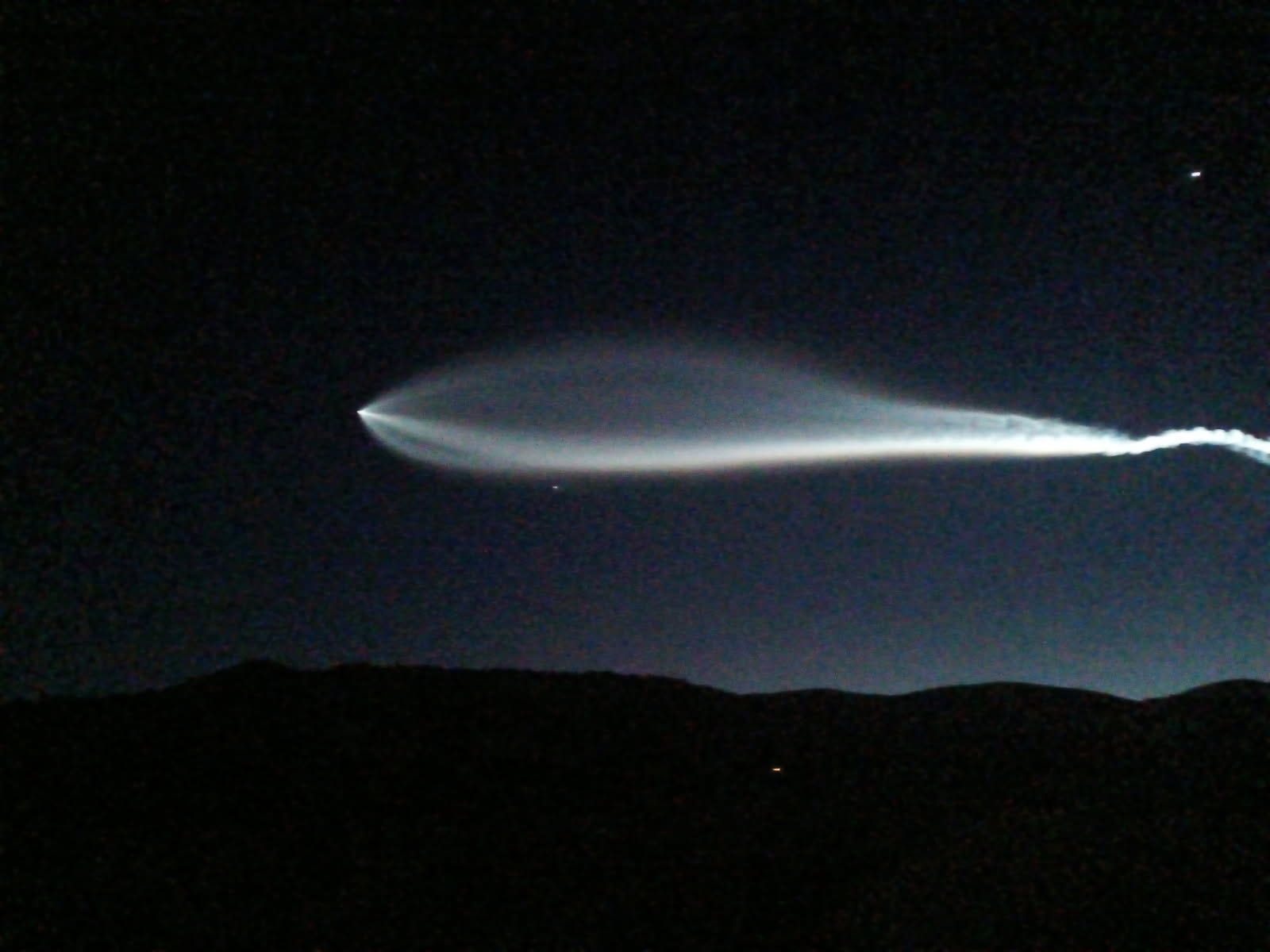
Every few months, I see a Falcon rocket climb into the California sky above the cabin. It’s awesome. But now when I watch a Falcon or a Starship take off, spewing all that smoke and fire, and often exploding into billions of pieces, I can’t help but feel that all that destructive and wasteful energy in pursuit of a Mars-shot mentality is anchored in escapism rather than exploration.
Young Steve looked up because he believed the greatest mysteries of the universe were hidden among the stars. Older Steve still looks up from time to time. But he finds just as much wonder kneeling in a pasture, picking blackberries in his backyard, or watching mushrooms emerge after a rain.
For me, the future is not waiting for us on Mars. The future is already here.
Beneath our boots.

Become a Paid Subscriber
If you enjoy these essays, please consider becoming a paid subscriber. My goal this summer is to add 20 new paid supporters (18 to go) before the end of July. In addition to the weekly newsletter, paid subscribers receive access to monthly cooking and kitchen workshops, quarterly Seasonal Table Live gatherings, exclusive recipes and downloadable resources, workshop recordings, the subscriber chat, and the full archive of more than 200 articles exploring food, nature, health, travel, and the stories that connect them.
New for Paid Subscribers: The CookStack Collective
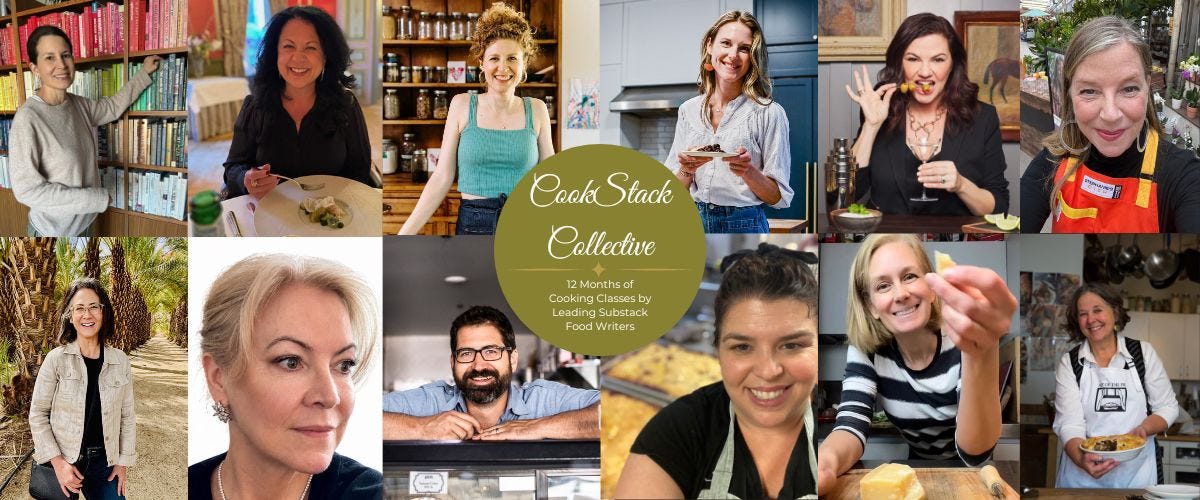
One of the things I miss most about butcher shops, restaurant kitchens, and family tables is learning alongside other people. That’s why I’m excited to announce a new benefit for paid subscribers: the CookStack Collective, a year-long collaboration with eleven incredible food writers, bakers, cooks, and teachers from across Substack. Over the next year, paid subscribers will receive access to 12 live cooking classes, recipes and class materials, and recordings of every session if they can’t attend live. Topics range from kimchi and fermentation to Italian meal prep, baking, soups, salads, seasonal cooking, and practical kitchen skills. If you’ve been considering upgrading to paid, this may be the strongest collection of benefits I’ve been able to offer yet.
Coming in July: Food, Blood Sugar, and Metabolic Health with Beth Bollinger
A few years ago, I discovered I was edging toward prediabetes and started paying closer attention to how food affected my body. For my next live conversation, I’ll be joined by metabolic health expert Beth Bollinger to discuss blood sugar, the foods that trigger it, and the simple habits and foods that can help create more stable health over time—as well as a few cool tech gadgets that helped me learn more about my body.
Stay Connected
Follow along on YouTube, Instagram and TikTok for video content, reels, and behind-the-scenes thoughts. I’m also on Facebook and LinkedIn.
Say hi on Substack Notes—I’m posting almost every day about my random reflections on life.
Join me in Chat. It’s a space just for subscribers, kind of like a group text but less embarrassing. Download the app, tap the Chat icon (it looks like two speech bubbles at the bottom), and find the latest “Enlightened Omnivore” thread.
A well written article. As to Elon he has been made a political target of hate, but we are fortunate to have him in USA. We were once fortunate to have him in California, but our crazy government can’t tolerate success.
Although we turn our up gaze to the heavens our feet are still firmly planted on terra firma and it is the home all space explorers eventually return. 🌎